
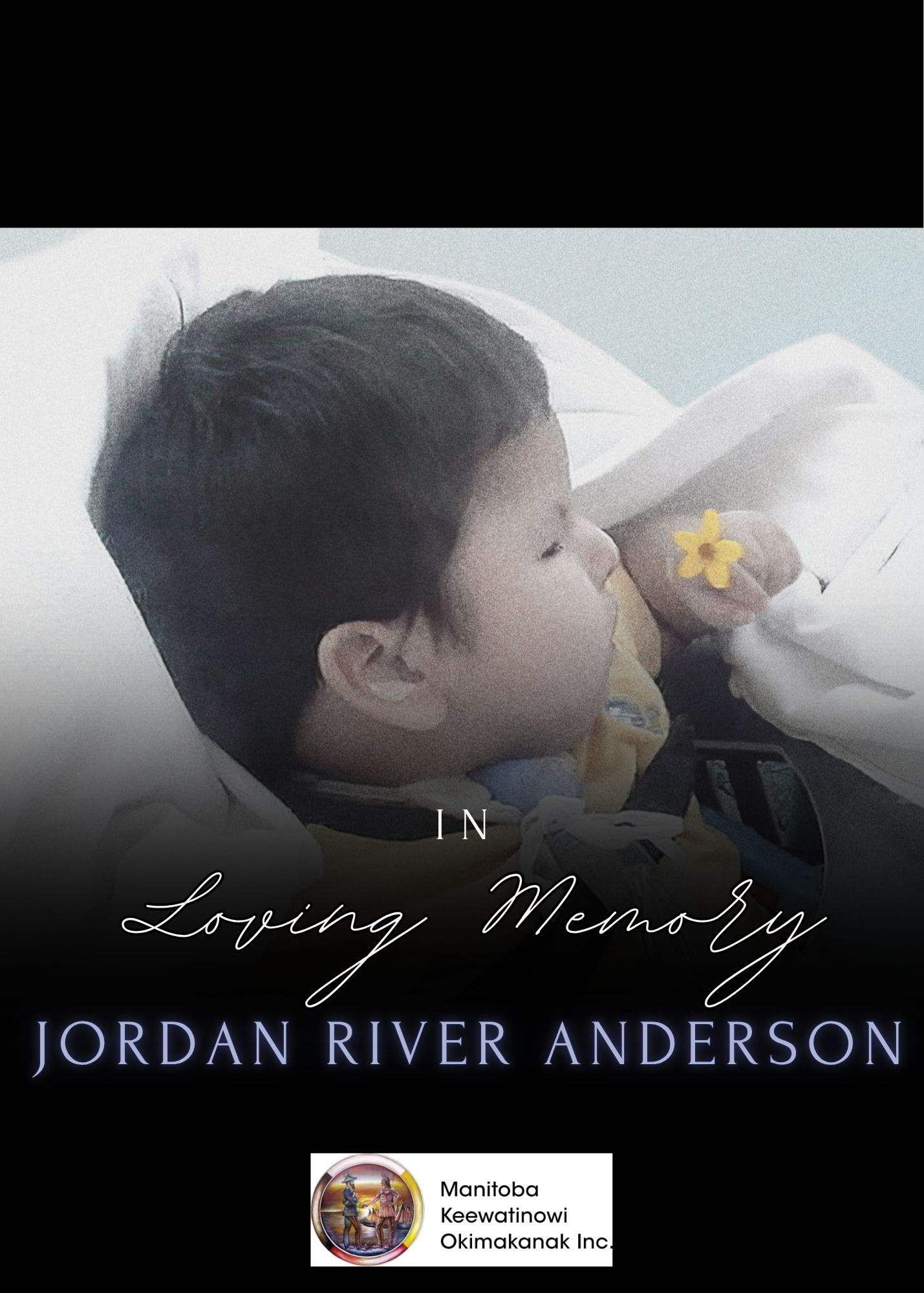
Jordan River Anderson was a young boy from Norway House Cree Nation in northern Manitoba who was born in 1999 with multiple disabilities. He lived over two years in a Winnipeg hospital because the federal and provincial governments could not agree on who would pay for his at-home care. Unfortunately, Jordan died at the age of 5 before he could experience living in a loving home.
Jordan’s death prompted a movement to uphold human rights for all First Nations children through the creation of the child-first principle called “Jordan’s Principle.” Jordan’s Principle is a legal rule that ensures that all First Nations children living in Canada can access the products, services and supports they need, when they need them.
In December 2007, the House of Common passed a unanimous motion: The government should immediately adopt a child-first principle, based on Jordan’s Principle, to resolve jurisdictional disputes involving the care of First Nations children. While the motion was not legally binding, it represented a political commitment to uphold the principle that First Nations children should receive services first, and Governments should resolve funding disputes later.
The Canadian Human Rights Tribunal has repeatedly found that Canada’s failure to implement Jordan’s Principle is discriminatory and harmful to First Nations children. The Tribunal has ordered Canada to fully and properly implement Jordan’s Principle. Those orders remain binding, yet children and families continue to face delays, denials, disruptions, barriers and uncertainty in accessing essential supports.
Today, marks what would have been Jordan’s 27th birthday. “Jordan will always be remembered, and his spirit lives on in our hearts”, said Grand Chief Garrisson Settee.
On Jordan’s 27th birthday, MKO calls on Canada to:
- Fully and properly comply with all Tribunal orders on Jordan’s Principle;
- Eliminate backlogs, delays, and administrative barriers so children receive the services they need when they need them;
- Ensure timely payment and reimbursements; and
- Work with First Nations rights holders to implement lasting, child-centred solutions grounded in substantive equality.
-30-